King’s College London and Cranfield University Merger: A Strategic Shift with Local Innovation Impact?
The proposed merger between King’s College London (KCL) and Cranfield University reflects a broader shift in higher education — from traditional academic silos toward integrated engines of innovation. While still under consideration, the move could reshape not only the UK’s research landscape, but also deliver tangible benefits closer to home, particularly for Milton Keynes.
At a national level, the logic is clear. King’s brings global research strength across life sciences, policy, and digital disciplines, while Cranfield contributes deep expertise in applied engineering, aerospace, and industry collaboration. Together, they could create a more complete innovation pipeline — from discovery through to real-world deployment.
But the local innovation story is equally important.
A Convergence of Strengths
Together, the institutions could create a powerful end‑to‑end innovation pipeline — from discovery and policy to prototyping, testing, and deployment. This model aligns closely with the UK government’s ambitions to strengthen translational research and accelerate commercialisation.
For students and researchers, the benefits are equally significant: expanded access to facilities, cross‑disciplinary collaboration, and stronger industry pathways.
Implications for the UK Tech Ecosystem
Beyond academia, the merger could have a meaningful impact on the UK’s broader technology ecosystem. A combined KCL–Cranfield entity would be uniquely positioned to support emerging sectors such as AI, telecommunications, quantum technologies, and advanced mobility — all areas where academic–industry collaboration is critical.
Fredi Nonyelu Biztech Chair, commenting on the proposal, highlighted the strategic importance of such integration:
“What we’re seeing is a shift from siloed excellence to connected capability. If executed well, this merger could create a blueprint for how universities support next‑generation industries — particularly in areas like telecoms, where research, infrastructure, and real‑world deployment need to converge much more rapidly.”
What It Means for Milton Keynes
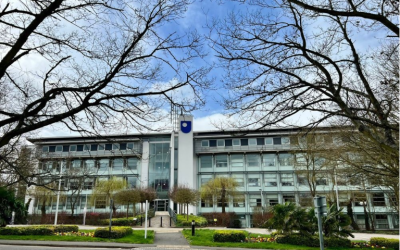
Cranfield’s proximity to Milton Keynes has already positioned the area as a growing centre for advanced technology and applied research. A merger could amplify this role significantly.
Increased investment, expanded research programmes, and stronger industry partnerships may flow into the region, reinforcing clusters in areas like AI, telecommunications, autonomous mobility, and sustainable infrastructure. For local businesses and startups, this means greater access to talent, specialist facilities, and collaborative opportunities.
Fredi Nonyelu highlights the strategic importance for the region:
“This is more than an academic merger — it’s an opportunity to strengthen regional innovation ecosystems. For Milton Keynes, closer alignment between research and real-world deployment could accelerate growth and attract new investment.”
Industry Perspective
Professor Ben Allen, lead consultant at Biztech, noted the potential for increased collaboration with SMEs and scale‑ups:
“For companies working in deep tech, access to facilities, talent, and research partnerships is critical. A combined institution could act as a hub for innovation clusters, particularly in areas like advanced communications and sustainable infrastructure.”
Challenges and Considerations
Despite its promise, the merger would not be without challenges. Differences in institutional culture, governance models, and strategic priorities would need careful alignment. King’s operates as a large, multidisciplinary university, while Cranfield is highly specialised and industry-focused. Balancing these identities will be key to ensuring the merger enhances, rather than dilutes, their respective strengths.
There are also practical considerations around funding, integration of campuses, and maintaining academic autonomy while driving commercial impact.
A Glimpse of the Future?
If realised, the KCL–Cranfield merger could become a test case for the next evolution of higher education — one where universities act as integrated platforms for innovation, rather than isolated centres of knowledge.
As Fredi Nonyelu observed:
“This isn’t just about scale — it’s about redesigning how knowledge turns into impact. The institutions that get this right will shape not just education, but entire industries.”
In a world increasingly defined by complex, interconnected technologies, that shift may not just be desirable — it may be essential.
Let us know what you think of Kings College London – Cranfield University merger by leaving a comment on BiztechMK LinkedIn page.
If you’d like to explore how Biztech can support your innovation journey, get in touch and start the conversation.